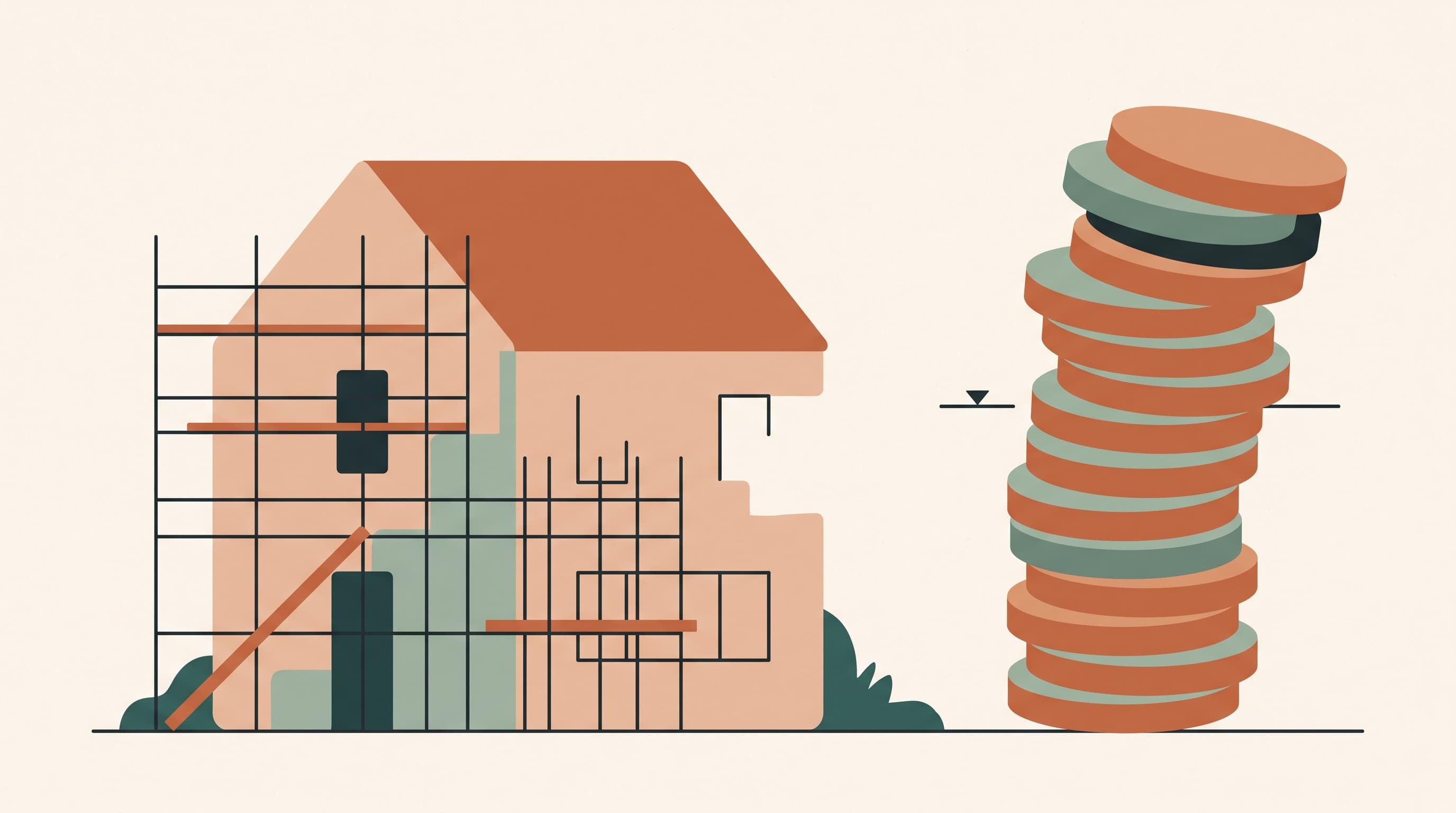
Your contractor sends a first invoice before a single brick has been laid. A few weeks later a "progress statement" follows, then a partial invoice for the shell, and somewhere along the way the word "retention" turns up. If you are building or renovating for the first time, it is hard to know what is normal, what exactly you are paying for and how much is still to come.
That overview is crucial all the same. If you do not track your advance and partial invoices, you eventually lose sight of what has been paid, what is still outstanding and whether the total is still within the agreed amount. In this article we explain the terms in plain language, show what is common practice and legally regulated across Europe, and give you a concrete step-by-step plan to keep track of everything. At the end you will also find a simple way to solve this with a tool.
Advance, progress statement, partial invoice and retention: what is what?
First the terms, because that is often where it already goes wrong.
- An advance (invoice) is a payment made before the works start or are completed. Usually you pay it right after signing the contract, before the works begin and materials are delivered. It is deducted from the final price later on.
- An interim progress statement or partial invoice charges part of the agreed amount based on work that has already been carried out. That is the essential difference with an advance: an advance runs ahead of work still to be done, a progress statement invoices work that is already finished.
- The final invoice settles all earlier advances and partial invoices, so that only the remaining balance is left.
- Retention is a percentage withheld from every interim payment as protection against defects, released only after handover. In European construction practice it is often 3 to 5% per payment (CICV best practice guide). Retention is not an advance, but deferred payment for work already delivered.

Why does a contractor ask for an advance in the first place? Usually to cover the start-up: ordering materials, preparing the site, scheduling staff. That is legitimate in itself. The risk lies in the proportion: the higher the advance, the bigger your loss if the contractor fails to perform or goes bankrupt.
And above all, remember this golden rule: the total of all invoices together must never exceed the contract amount. That sounds obvious, but without a properly maintained overview you simply cannot check it.
One contract amount, four invoices
Example: roofing work of € 40,000. The advance runs ahead of the works; the three invoices that follow charge work already carried out. Together they add up to exactly the contract amount, never above it. If you also agree a retention of 3 to 5%, that share of every interim payment is withheld and paid only after handover.
How much advance is normal, and what does the law say in Europe?
The European Union has no harmonised rules for advances and partial invoices in construction work. How well you are protected therefore depends on the country where you build and on the type of contract. A few examples show how different that framework can be:
- France sets legal maximums per construction phase for off-plan sales through the VEFA scheme: at most 35% of the price on completion of the foundations, 70% at the shell stage, 95% on completion of the building, and the last 5% only at handover without reservations.
- Spain requires all advance payments for a home under construction to be covered by a bank guarantee or insurance policy in favour of the buyer, including taxes and statutory interest.
- Germany anchors progress invoices (Abschlagsrechnungen) in §632a of the Civil Code: interim payments must be linked to objectively measurable progress.
- Belgium applies the Breyne Act to turnkey contracts and off-plan sales, with a mandatory maximum advance of 5% of the total price.
Outside such specific regimes, so for most ordinary renovations, there is no legal ceiling on advances in most European countries. What counts as reasonable is then sector practice rather than law. The Belgian Consumer Council, for instance, considers advances of 20 to 30% normal in classic house building, provided the balance is paid in instalments as the works progress.
The common thread is the same everywhere: payments should follow actual progress. Where the law imposes no ceiling, consumer organisations advise avoiding large advances and agreeing phased payments that are written into the contract. That procedural safeguard works in every European country, whatever the local details.
Step-by-step: how to track every invoice correctly
You do not need to be a lawyer or an accountant to do this well. These five steps are enough.
Step 1: put a payment schedule in the contract
Agree before the start which percentages are paid at which moments, tied to clear, verifiable phases: on delivery of the windows, after the roof is installed, after handover. Put any retention arrangements in writing too: which percentage, and when it is released.
Step 2: check every invoice for type and amount
For each invoice, ask: is this an advance, a progress statement or the final invoice? Does the amount match the payment schedule? And with a progress statement: does the amount invoiced correspond to work actually carried out?
Step 3: ask for proof of progress
Practical guides for construction contracts recommend supporting payments with demonstrable progress: quantities, photos, reports or certificates. Professional clients even have progress statements formally certified before paying. As a private client you can easily apply the same principle: walk the site or ask for photos before you pay a partial invoice.
Step 4: keep one overview of all invoices
Note per invoice: the date, the type, the amount, what you have already paid and the outstanding balance per item. Store the PDF of every invoice with the right item, so you can settle later disputes with documents instead of memories.
Step 5: check the final invoice extra carefully
The final invoice must correctly settle all earlier advances, partial invoices and any retentions. Add everything up and test it against the contract amount. This is the moment when a well-kept overview pays for itself.
From scattered folders to one overview: how a digital tool helps
Most renovators keep track of this today in an Excel file, a folder of papers or not at all. The problem is always the same: the invoices are not in the same place as your budget, and the link between a quote and the partial invoices that follow it has to be made by hand every time.
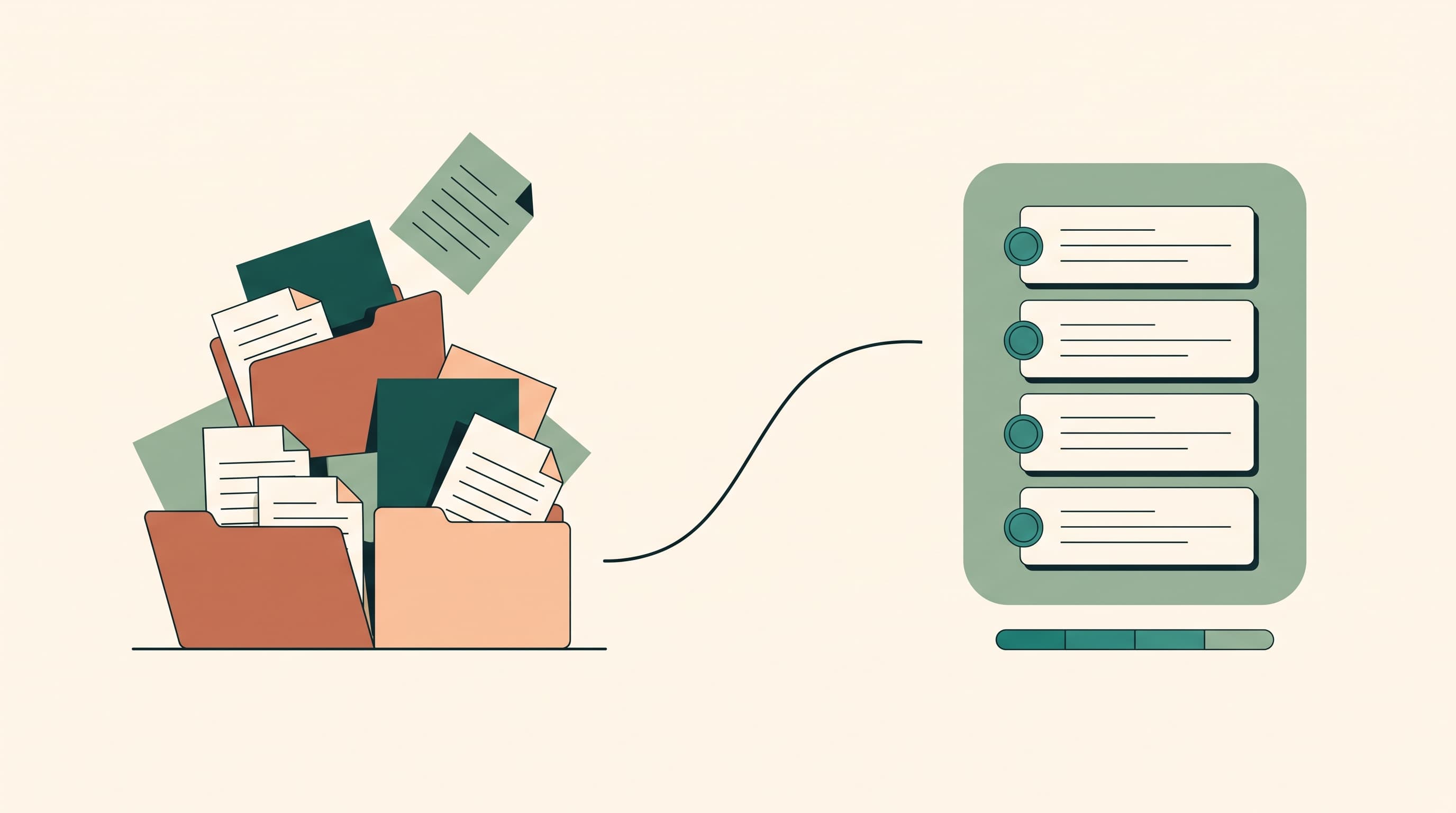
If you do not want to lose hours on this, one central tool solves it. In our case we do that with PiggyPlanr, a budget app with a separate build mode. For tracking advances and partial invoices it works like this:
- You create a quote project per part of your renovation (kitchen, roof, windows). As soon as you select a quote, the amount is reserved: your dashboard shows what is already committed before a single invoice arrives. If the reserved amount does not fit within that item's budget, the row turns red.
- When the contractor sends an advance or partial invoice, you convert the quote fully or partly into an invoice. You simply enter the partial amount; the rest is already filled in from the quote.
- The app then shows the remaining amount per quote and a list of what has already been invoiced. Every euro moves automatically from "reserved" to "spent", without double counting. That way you see at once whether the total stays within the agreement.
- Every invoice gets a date, supplier, invoice number, funding source (loan or own funds) and even a PDF attachment if you want. When the contractor calls about "invoice 2025038", you find it in seconds.
This gives you exactly the overview that professional clients organise through expensive contract procedures, but on your phone. Retention arrangements and VAT remain things you settle in your contract and with your contractor; the app keeps the amounts and documents for you. Your admin stays a matter of minutes instead of evenings.
What changes if you keep this up?
After 3 months you have a fixed routine: every invoice is checked on arrival for type and amount, linked to the right item and archived straight away. At any moment you know what you paid to whom.
After 6 months, in the middle of the works, you see at a glance which items still have room and which are under pressure. If a partial invoice comes in higher than budgeted, you notice immediately and can steer instead of being surprised.
After 12 months the final settlement arrives. Where many builders then have to puzzle over bank statements and stray emails, you simply put your overview next to the final invoice and check within fifteen minutes whether all advances and partial invoices have been settled correctly.
Conclusion: an overview is your best protection
Advance invoices, progress statements and partial invoices are not exotic accounting terms, but the way almost every renovation is paid for. Legal protection differs strongly per country, so your biggest safeguard is the process itself: a clear payment schedule in the contract, payments tied to demonstrable progress, and one overview holding every invoice, every amount and every balance. With the five steps from this article you have everything you need to start today.
Would you rather not maintain that overview in an Excel file yourself? Try PiggyPlanr for free and track your quotes, invoices and construction budget in one place, 14 days without obligation.
Sources
- European Commission, "VAT Directive: Chargeable Event" (VAT on advance payments). https://taxation-customs.ec.europa.eu/taxation/vat/vat-directive/chargeable-event_en
- Finalteri Avocats, "Payment in instalments under a VEFA contract" (France, statutory instalments of 35, 70, 95 and 5%). https://www.christian-finalteri-avocat.fr/en/payment-in-instalments-under-a-vefa-contract/
- Banco de España, "Guarantees when buying a home" (Spain, mandatory guarantee on advance payments). https://clientebancario.bde.es/pcb/en/menu-horizontal/productosservici/avales/guia-textual/garantia-de-devo/
- Stripe, "Progress invoicing in Germany explained" (§632a BGB). https://stripe.com/resources/more/progress-invoices-germany
- Stripe, "Advance invoices in Germany explained" (VAT due on receipt of the advance). https://stripe.com/resources/more/advance-invoices-germany
- FPS Economy, "Breyne Act" (Belgium, maximum advance of 5%). https://economie.fgov.be/nl/themas/consumentenbescherming/bouwen/wet-breyne
- Consumer Council, "Advice 499 on advances" (Belgium, practice of 20 to 30% advance). https://economie.fgov.be/sites/default/files/Files/About-SPF/avis-cc-rvv/Advies-499-Raad-Verbruik.pdf
- VGD, "Advances with or without VAT" (Belgium, VAT rules for advance invoices since 2015). https://vgd.eu/blog/voorschotten-met-of-zonder-btw
- CICV and FIS, "Best Practice Guide: Retention in Construction Contracts" (retention practice of 3 to 5%). https://www.thefis.org/?td_restrict_media_path_by_role=/wp-content/uploads/2019/12/CICV-Note-7-Retention.pdf
This article is general information, not legal or tax advice. For a specific case, contact your contractor, notary, lawyer or accountant.
Frequently asked questions
How much advance is normal for a renovation?
That differs strongly per country and per type of contract. Only specific regimes impose hard limits, such as the French VEFA instalments or the Belgian Breyne Act maximum of 5%. For ordinary renovations there is no legal ceiling in most European countries; as an indication, the Belgian Consumer Council considers 20 to 30% common sector practice, provided the balance follows in instalments. Be wary of advances well above that and always ask for phased payments.
What is the difference between an advance invoice and a progress statement?
An advance invoice asks for payment for work that still has to be done. A progress statement or partial invoice charges work that has already been carried out, based on progress. So with a progress statement you may expect proof of that progress.
When is VAT due on an advance payment?
The European VAT Directive states that VAT on a prepayment becomes due at the moment the payment is received, and only on the amount received, provided it is clearly described what you are paying for. The practical implementation differs per country. In Germany, for example, VAT on an advance is due as soon as the payment comes in, and in Belgium a contractor has been allowed since 2015 to choose between a payment request without VAT followed by a final invoice, or an advance invoice with VAT. If you are unsure about a specific case, put it to your accountant.
What is retention and should I apply it?
Retention means you withhold a small percentage of every interim payment until after handover, as security for repairing defects. In European practice it is usually 3 to 5%. It is not an obligation but a contractual arrangement: if you want to use it, put the percentage and the moment of release explicitly in the contract.