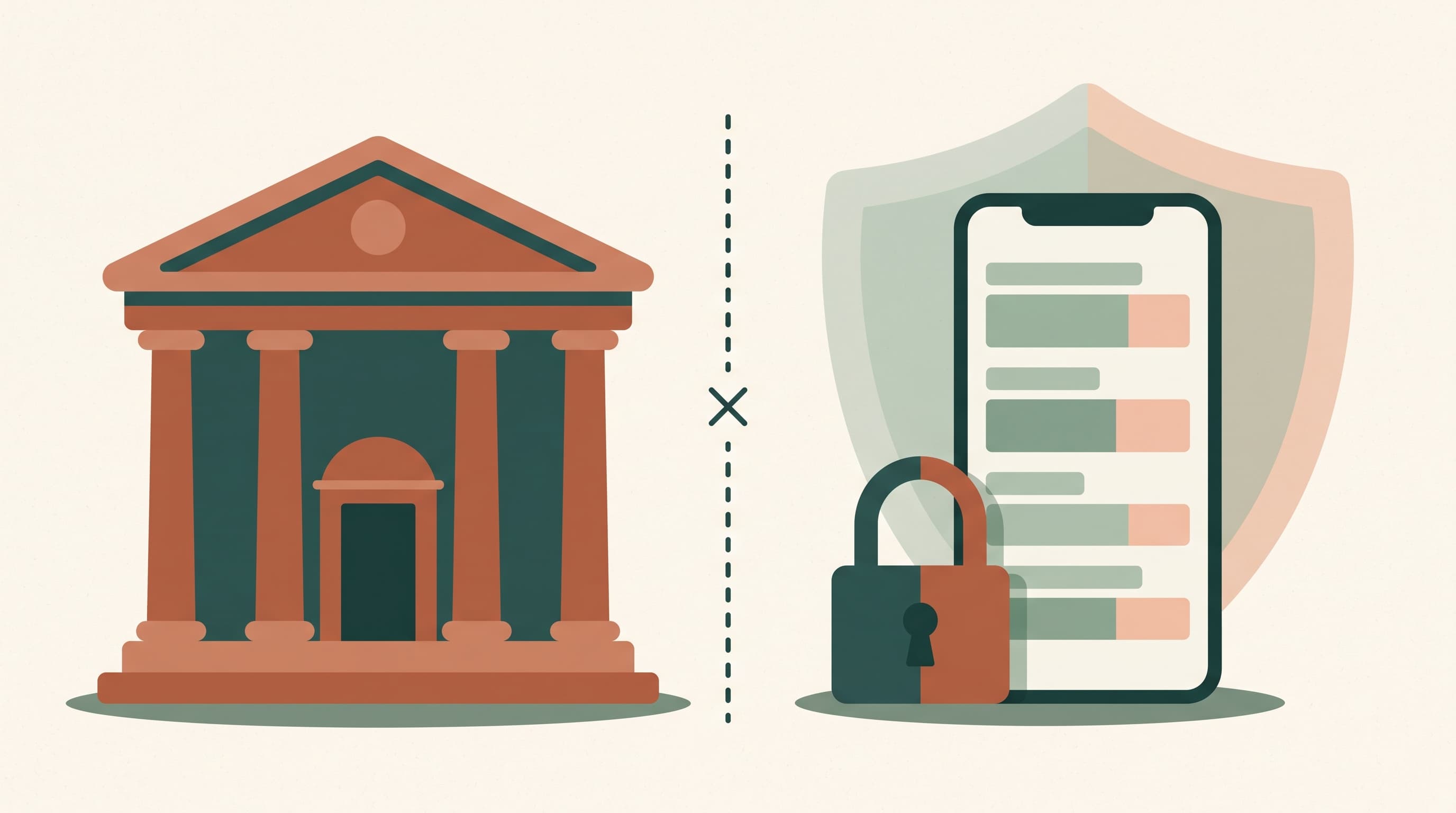
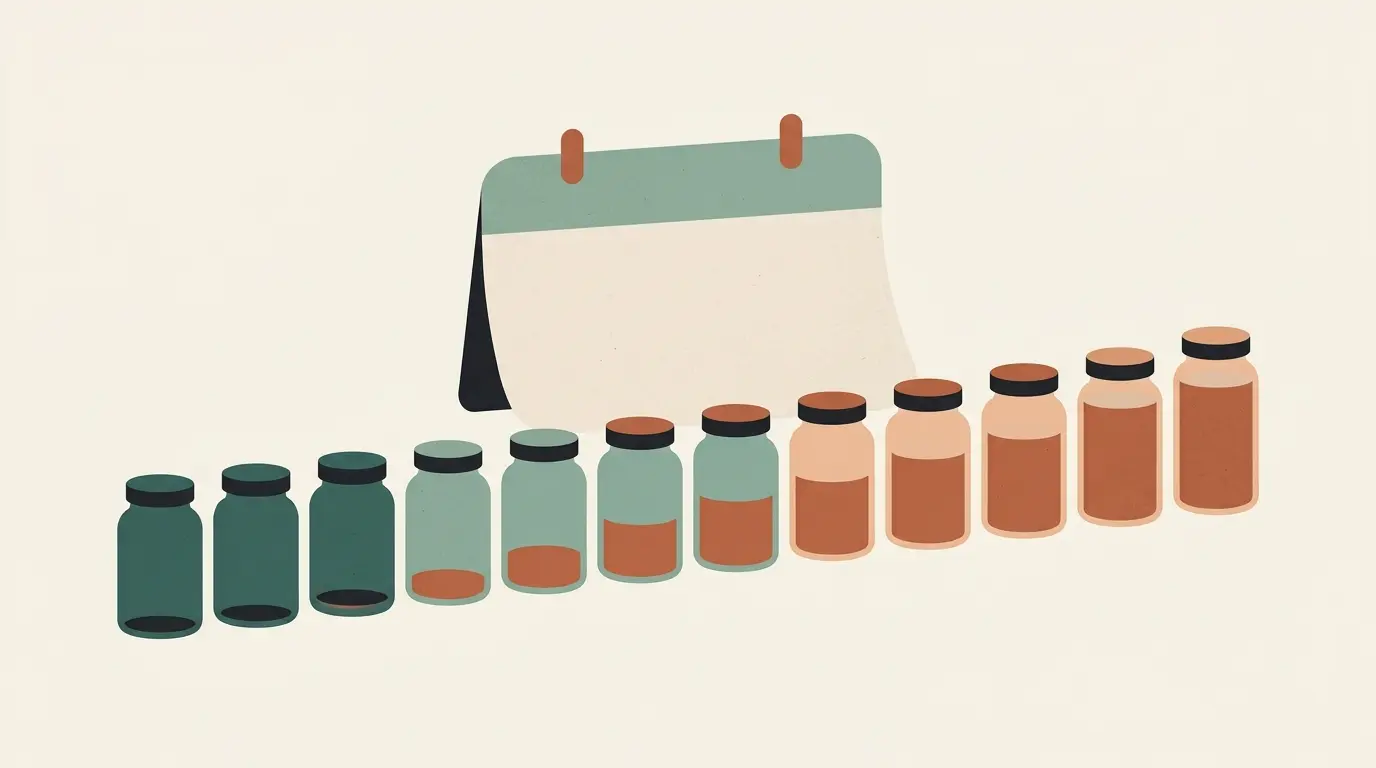
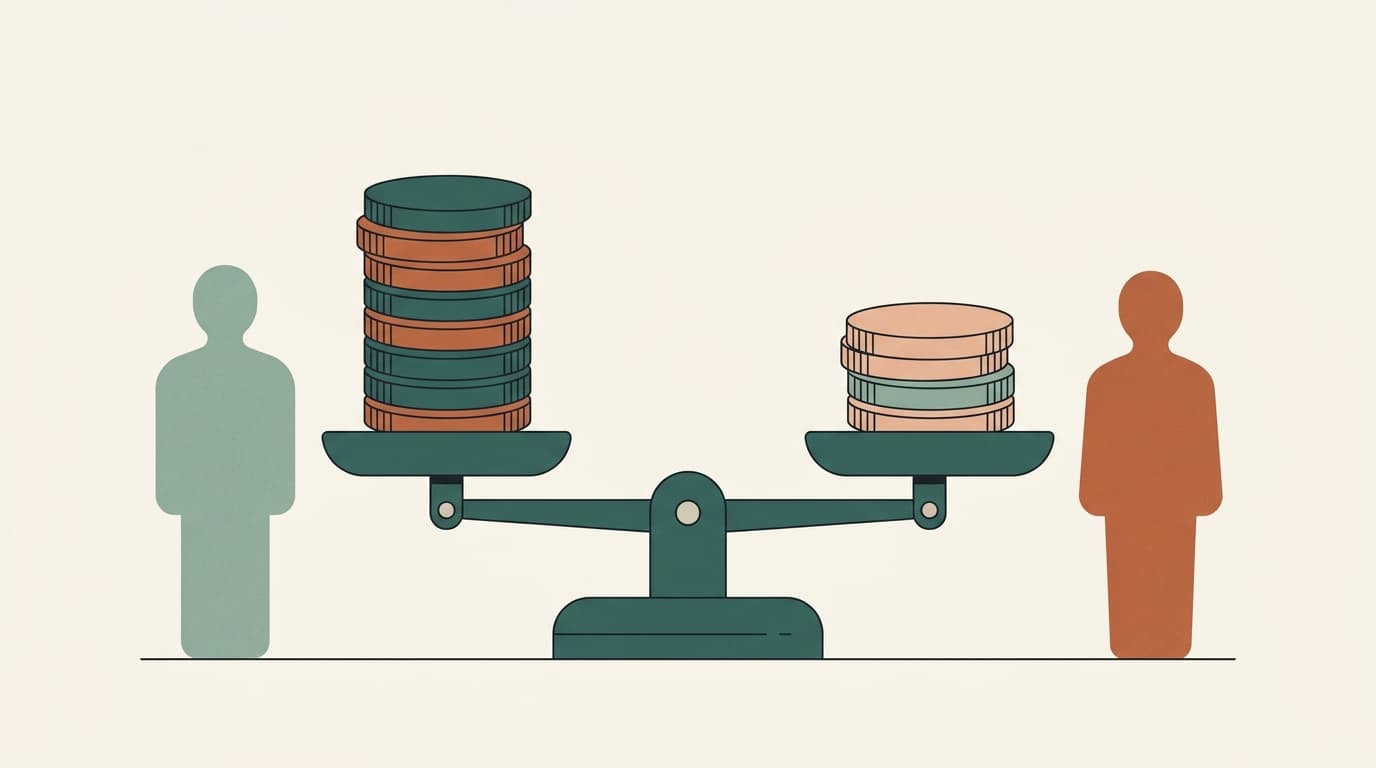
It's the fourteenth of the month. You open your banking app and the balance looks fine. Yet you know the car insurance is still coming, along with the school invoice and the car's maintenance service. The balance on your screen looks healthy, but it doesn't tell you how much of that money already has a destination. It gives no answer to the question that really matters: how much can I still safely spend this month?
That is the difference between tracking expenses and planning ahead. In this article you'll read why a healthy-looking balance can put you on the wrong foot, what science says about planning in advance versus registering afterwards, and how to learn to plan ahead yourself with pots and monthly contributions. At the bottom you'll find a simple way to solve this.
Why a positive balance can put you on the wrong foot
Many banking apps and budget apps work on the same principle, and so does anyone who tracks their expenses in a spreadsheet: first the payment happens, then it gets a label. Groceries, transport, housing. Sometimes that happens automatically, sometimes you do it yourself. That is called categorising afterwards, and it answers only one question: where did my money go? About the rent due next week or the insurance that isn't due for another four months, such an overview says nothing. For a system like that, those costs simply don't exist yet.
Behavioural economics explains why that insight after the fact changes so little about your behaviour. According to Richard Thaler's classic work on mental accounting, getting a grip on spending requires two steps: you have to notice an expense and assign it to the right mental pot. Categorisation takes at most that second step off your hands. The moment of reflection, however, only comes after the money is already gone. In other words: when it's too late.
On top of that, paying digitally literally hurts less. A large-scale replication study from 2026 with more than 32,000 participants confirms that paying by card evokes less "pain of paying" than paying cash, and is associated with higher spending. So you feel the expense less in the moment, and you only see it back afterwards in a chart.
The numbers show how widespread this problem is. Only 18% of EU citizens have a high level of financial literacy, according to the Eurobarometer survey by the European Commission. And according to the European Consumer Payment Report, a commercial survey of some 20,000 consumers in 20 European countries, 76% of Europeans just get by or spend more than comes in, with an average of 232 euros of overspending. 35% missed at least one bill payment in the previous year.
Does this mean tracking expenses is worthless? No. Historical insight is useful, and direct comparative research between categorisation apps and planning tools doesn't exist yet. But there are strong indications that looking back alone is not enough. An Austrian randomised study among young people found that users of a budget app checked their balance more often, without strong evidence that their financial knowledge substantially improved as a result. And in a longitudinal study among 363 North American participants, people who made a spending plan in advance spent less than planned, while the group that adjusted afterwards actually spent more than planned. One study is not a universal law, but the direction is clear: the moment of reflection belongs before the expense, not after it.
Planning ahead: how it works in four steps
Planning ahead flips the model around. You decide in advance what happens with your income, so that at any moment you know how much is still truly free. You set this up in four steps.
Step 1: map out all your fixed and predictable costs
Write down all fixed charges (rent or mortgage, energy, insurance, subscriptions) and the costs that recur less often but are predictable: quarterly, half-yearly or yearly. Spread each of those amounts fairly over a monthly contribution. For example: a yearly cost of 1,200 euros you simply divide by twelve. Set aside 100 euros per month to have the required 1,200 euros available at the end of the year. The Dutch budget institute Nibud calls such costs reservation expenses.
Step 2: distribute your income over pots in advance
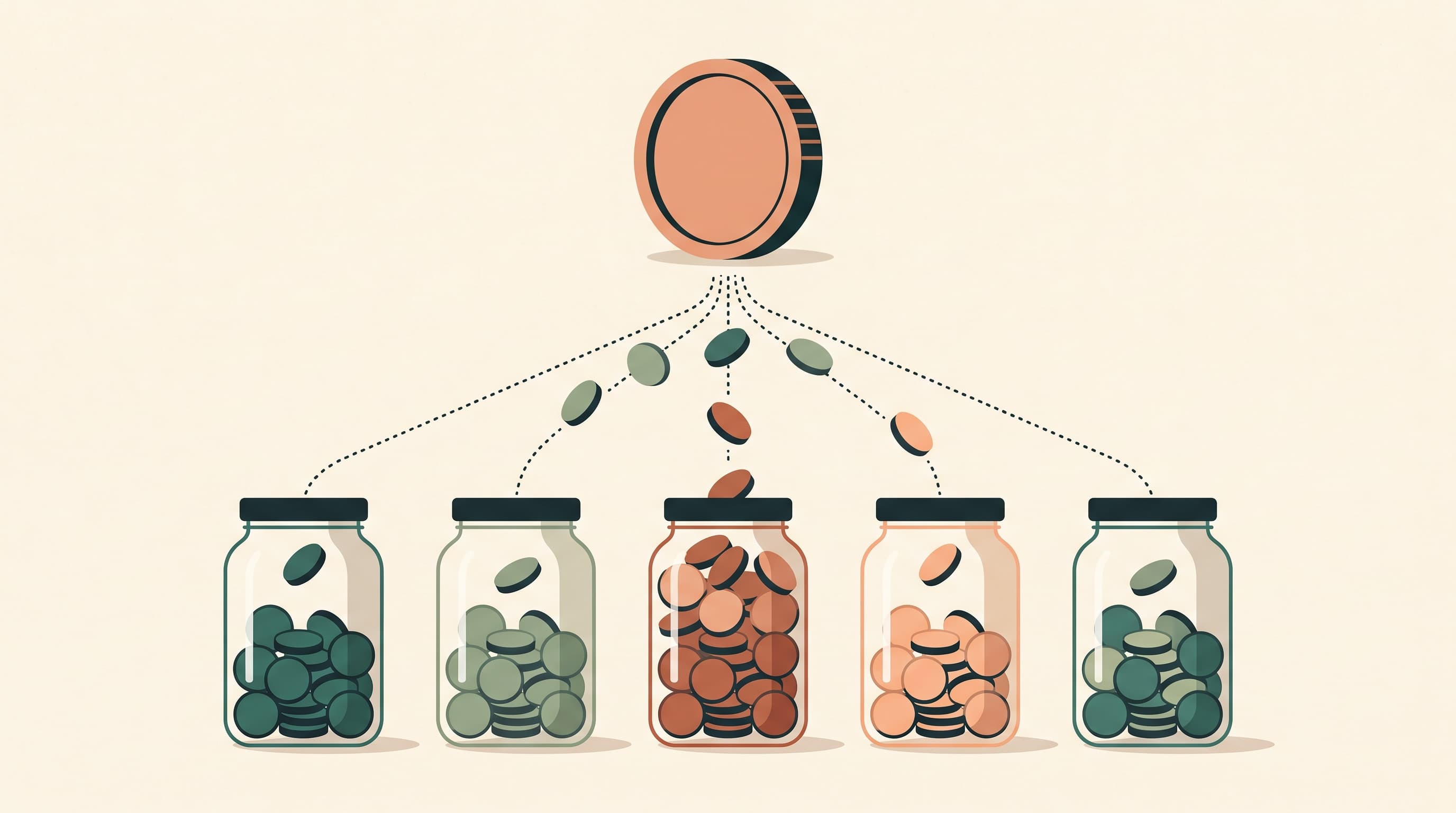
Give every euro the right destination at the start of the month. For every cost item you know, you have your own virtual pot, and each month you put in the contribution you calculated in step 1. That way every pot grows to exactly the amount that's needed. You also set up such a pot for saving. That way you know that whatever remains after distributing across the various pots is your amount for free spending. In principle you leave the money in the pots alone until the invoice arrives. That way the yearly invoice is no longer a surprise, but a pot that has been waiting for months.
Step 3: track per pot what's available
If you set money aside neatly, there is little to do here: there is simply enough in every pot each time. Still, it pays to track per pot how much is available right now, and to look ahead to the end of the year.
Invoices don't always stick to your saving rhythm. Suppose: you set aside 100 euros per month for that cost of 1,200 euros per year, and the invoice already arrives in September, when you have only built up 900 euros. Then you simply pay the full 1,200 euros from that pot, which temporarily drops to minus 300 euros. That's not a problem: what you have actually done is temporarily "borrow" from another pot of your own. Because you simply keep depositing 100 euros in October, November and December, that shortfall corrects itself. At the end of the year the total picture adds up again, and you knew at every moment that this expense wouldn't get you into trouble. That is financial peace of mind!
Saving for a yearly cost of € 1,200
Invoice € 1,200 in September
You deposit € 100 every month. If the invoice already arrives in September, the pot temporarily stands at minus € 300. By simply continuing to deposit, it is back to zero by December.
Step 4: build up a buffer
Unexpected costs always exist, even with a good plan. The Dutch Nibud, for example, advises as a guideline to set aside at least 10% of your monthly income as a buffer. That is policy advice and not a law, but the principle applies everywhere: a fixed buffer pot prevents one broken washing machine from upending your whole plan.
How a tool makes this easier
This whole system can live in a spreadsheet. Many people start that way, and drop out because keeping it up to date takes time and one forgotten formula breaks the overview. If you don't want to lose hours per month to it, you can solve this more easily with a tool built around this principle. In our case that is PiggyPlanr, a budget tool for households that works by reserving ahead instead of categorising afterwards.
On the dashboard you see all your categories and budget items in one overview, with per item how much is available right now, positive or negative. Turn on the forecast, and per budget item it shows how much will be available by the end of the year if you keep saving according to your budget. The pot from our example just now, which stood at minus 300 euros after that early invoice? The forecast immediately shows that it comes back to zero by December. So you see at a glance that a temporary shortfall resolves itself.
The monthly administration is also reduced to one click: PiggyPlanr distributes your income automatically across your pots, you tick off fixed charges instead of typing them in, and if you forget one, the system corrects it at the month change.
What changes after 3, 6 and 12 months
Take a family with two children, a mortgage and two cars. They earn enough to get by, but every month in which many invoices coincide feels like a surprise. This is what their year with forward planning can look like.
After 3 months. All fixed charges and predictable costs are in the system, each with their monthly contribution. The first month changes take some attention, but for the first time the family now sees the difference between "what's in the account" and "what of that is still free". Impulse purchases become a conscious choice from the pot for free spending.
After 6 months. The pots for yearly costs are half filled. The car insurance that used to cause a small panic attack is now a payment from a pot that stands ready for it. And if an invoice arrives earlier than expected, the forecast shows that the shortfall corrects itself by year end.
After 12 months. The family has gone through a full year of budgeting, and no month feels heavy anymore. That is exactly the point: the months in which many invoices used to coincide are spread out over the whole year. Every month now weighs the same, and for every invoice a pot stands ready. The buffer has grown step by step, and the conversation about money is no longer about what went wrong, but about what's possible: the holiday, the new bike, the savings goal for the kids.
From looking back to looking ahead
Your bank balance tells you what's in your account today, but not how much of it is effectively available. Part of that money should really already be reserved for expenses you know are coming. So your account balance can paint a distorted picture, making you think more is available than what truly remains. Tracking and categorising expenses gives useful historical insight, but the moment of reflection only comes after the money has been spent. Planning ahead puts that moment before the expense, and according to behavioural economics that is exactly where it belongs. With monthly contributions, pots and a buffer you have everything you need to start today.

Sources
- European Commission, Monitoring the level of financial literacy in the EU, Eurobarometer, July 2023
- European Consumer Payment Report, annual commercial survey of around 20,000 respondents in 20 European countries
- Thaler, R.H., Mental accounting matters, Journal of Behavioral Decision Making, 1999
- A Mega-Replication of the Effect of Cash Versus Card Payment on Pain of Paying, Journal of Consumer Research, 2026
- Davydenko, M., Does Timing of Self-Control Strategies Matter?, longitudinal study on proactive versus reactive self-control (N=363)
- WU Vienna, Smart tools? A randomized controlled trial on the impact of budgeting apps, Journal of Behavioral and Experimental Economics, 2018
- Nibud, The Nibud method of budgeting
- Nibud, Saving: how to approach it
Frequently asked questions
What are reservation expenses?
Reservation expenses are costs that don't occur monthly but are predictable, such as car insurance, the school invoice or car maintenance. You convert them to a monthly amount by dividing the yearly amount by twelve: for a yearly cost of 1,200 euros you set aside 100 euros per month. That way the invoice is no longer a surprise, but a pot that has been standing ready for months.
What do I do when an invoice arrives before the pot is full?
You simply pay the full amount from that pot, which temporarily goes negative. That's not a problem: you are temporarily borrowing from another pot of your own. Because you simply keep depositing the monthly contribution, the shortfall corrects itself and the total picture adds up again at the end of the year.
How much buffer should I keep for unexpected costs?
The Dutch budget institute Nibud advises as a guideline to set aside at least 10% of your monthly income as a buffer. That is policy advice and not a law, but the principle applies everywhere: a fixed buffer pot prevents one unexpected cost, such as a broken washing machine, from upending your whole plan.
Can I plan ahead in a spreadsheet?
Yes, the whole system of pots and monthly contributions fits in a spreadsheet. Many people start that way, but drop out because keeping it up to date takes time and one forgotten formula breaks the overview. A tool built around this principle, such as PiggyPlanr, distributes your income across your pots with one click and shows per pot what's available now and at the end of the year.